

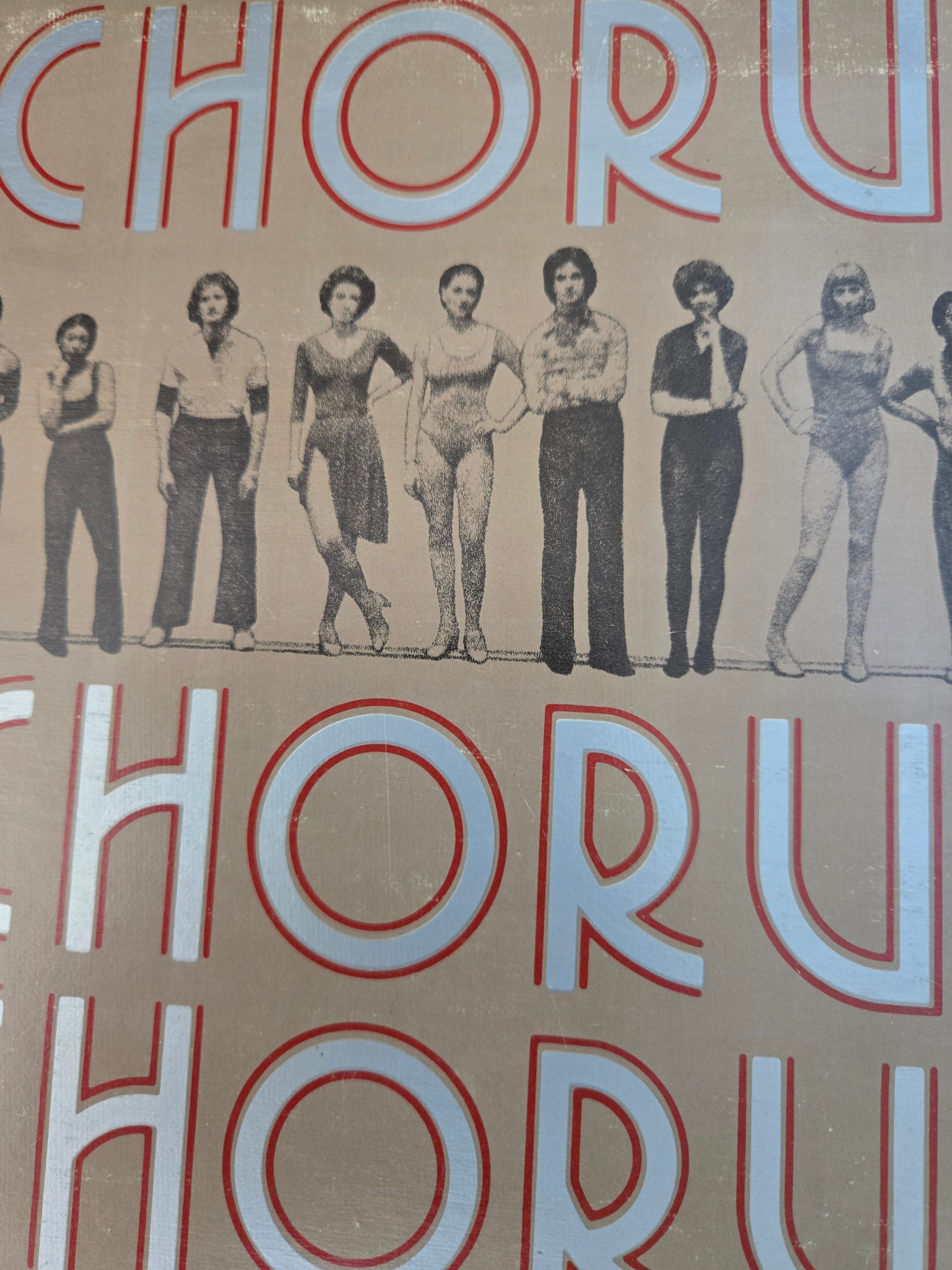
On July 25th, 2025, the musical A Chorus Line will celebrate the 50th anniversary of its opening on Broadway at the Schubert Theatre in New York. Expect the celebration to hit the news on the day.
I’m aware of the event because of the significance the show has held in my life.
Next-to-no Theatre as a Youngster
When I grew up in Montreal in the 1960’s, I was not taken to any English language, or French language live theatre. My earliest memories of seeing a play (Grade3?) was a choose-the-ending fairy tale that toured our school on Montreal’s West Island. My only other memory of live performance was seeing The Nutcracker at Place Des Arts. And a performance of King Lear starring William Hutt, on its way to Moscow.
When my father got transferred to Toronto in 1973, friends of my parents got them to go in on a subscription to The Royal Alexandra Theatre. I got taken a couple of times. I vividly remember Maggie Smith stopping the show (Noel Coward’s Private Lives) by merely uttering her husband’s name with disgust.
We also attended performances at The Stratford Festival. I still have a poster of the production of As You Like It, starring Carole Shelley as Rosalind.
All of these plays were enjoyable but I can’t say they persuaded me of the magic of the theatre. I skeptically regarded the fakery of stage sets and thought that movies could do a better job.
Until I saw A Chorus Line.
The Right Play at the Right Time
It probably took the theatricality of a show like Michael Bennett’s creation to pull me out of my naivete and show me something the stage could do better than cinema.
I kind of knew the show was special by its advertising. The newspaper ad read “Hot Tickets for Sale”. It described the Pulitzer Prize-winning play- a musical about an audition for a musical- but it was the final sentence that got my attention. Paraphrased, it said something like- “whether you are a seasoned musical-goer or have never seen a Broadway musical, there has never been anything quite like A Chorus Line”. That declaration, along with the iconic image of the dancers standing in a line, hooked me.
My parents saw it first, without me, with their subscription. I remember they came back and gushed about it. (Dad didn’t usually but even he said it was fantastic.) I’d also seen some of the show on the 1976 Tony Awards. Again- just enough to make me want to go.
I begged off school for a Wednesday matinee (am still surprised, looking back, that my Mom let me do this), and went with a friend.
Two things got my attention as soon as we walked in the theatre. The curtain was up and the set was seemingly empty except for a white taped line across the front of the stage. Did they forget the set? When I opened the program, it established where we were. The scene: an audition; The place: here The Time: Now. (In revivals of the piece, the time states clearly: 1975). If I had ever had difficulty with suspending my disbelief for a play, there would be no issue here. The theatricality of the premise was the reality of the show.
And then the opening number, “I Hope I Get It”. The stage suddenly filled with dancers, and an upstage mirror a dominating backdrop. The show never let the audience go: the line of auditionees standing on the tape, holding their headshots like false masks; the disappearance of the line for various musical numbers, strikingly first for “At The Ballet”, written for three of the female-identifying dancers; Cassie’s show-stopping solo with single mirrors dropping from the ceiling to frame her; Paul’s devastating monologue about coming out to his parents; and of course, the unexpected glittering finale which doubles as the curtain call.
Over and over gain, a show filled with theatrical moments that took full advantage of being on stage in front of us.
To underline it further, the film version years later was awful. It stupidly tried to imitate the claustrophobia of the audition in the theatre which failed to take advantage of what film could do (What about flashbacks?). Live on stage, the show, as proven in revivals, hardly misses. Over time, the play has become dated, but still works.
The Theatre- Its Own World
A Chorus Line opened my mind to theatre as its own language and world. It wasn’t trying to imitate life as we might see in a movie. It was presenting something different and unique unto itself. And part of its magic was that it was live in front of you. How did they do that? The theatre’s mystery remained eternally compelling.
I then regarded even narrative driven, traditional plays differently after seeing the musical. I appreciated when a production used the theatre and the stage to advantage to emphasize a story or character element. I could fill another post with examples.
When I returned to teaching high school English and Drama in my forties years later, this appreciation for the stage space and all it could do informed what plays we performed and how we did them.
I could say a lot more. But I remained indebted to how that show, seen when I was sixteen, three years after having a similar awakening with the film version of Cabaret, stretched and began to form my artistic perceptions.